Wednesday, December 10, 2025

Smart Home Appliances Market: Revolutionizing Modern Living Through Connected Intelligence to 2030

The Connected Home Revolution

Smart home appliances are becoming a central pillar of modern households as consumers increasingly adopt connected, automated technologies that enhance convenience, efficiency, and comfort. From smart refrigerators and connected washing machines to robotic cleaners and intelligent cooking systems, appliances are evolving into adaptive, data driven devices that can analyze usage patterns, reduce energy consumption, and deliver personalized experiences. This shift reflects a broader global transition toward fully connected living environments where appliances are no longer standalone units but integrated components of a seamless digital home.

Download PDF Sample:
https://www.marketsandmarkets.com/pdfdownloadNew.asp?id=8228252
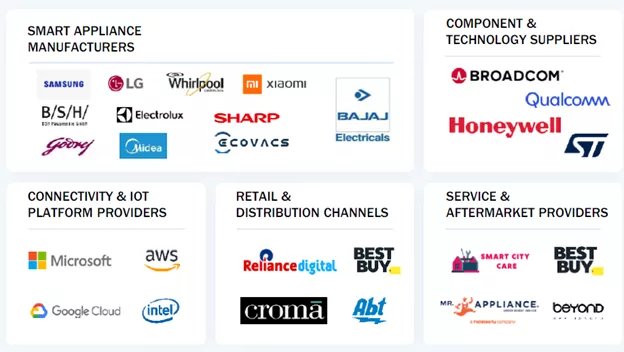


The smart home appliances ecosystem is a connected network of manufacturers, technology providers, platforms, retailers, and service partners that enable intelligent, automated households. Leading appliance makers design Internet of Things enabled refrigerators, washers, air conditioners, and cleaning systems, supported by component suppliers that provide advanced semiconductors, sensors, and connectivity modules. Cloud and Internet of Things platforms ensure real time monitoring, automation, and interoperability across devices. Products reach consumers through major retailers and online channels, while service providers handle installation, maintenance, and technical support. Together, these layers form a robust ecosystem driving the global smart home appliances market toward fully connected living.

Market Growth and Projections

The smart appliances market is projected to reach USD 71.28 billion by 2030 from USD 42.35 billion in 2025, representing a compound annual growth rate of 11 percent during the forecast period. This remarkable growth encompasses a wide range of products including refrigerators, washing machines, dryers, dishwashers, ovens, cooktops, air conditioners, water heaters, microwaves, coffee makers, vacuum cleaning robots, air purifiers, and cooking robots. These connected devices enhance convenience, energy efficiency, and performance through Internet of Things and artificial intelligence technologies, driving widespread adoption of smart and automated living solutions worldwide.

The demand for smart home appliances is rising globally due to a confluence of lifestyle, economic, and sustainability factors. Consumers are increasingly prioritizing convenience, contactless functionality, and real time control over household operations. At the same time, rising energy costs and growing environmental awareness are driving interest in energy efficient appliances that can intelligently regulate consumption and provide detailed usage insights. Government incentives, utility rebates, and the expansion of smart grids are further accelerating adoption rates across developed and emerging markets. Additionally, the rise in urban living, dual income households, and time constrained lifestyles is driving consumers toward appliances that simplify daily routines and boost home productivity.

Artificial Intelligence as a Market Disruptor

Artificial intelligence is becoming the key disruptor in the smart home appliances market, enabling devices to evolve from reactive tools into proactive, self learning systems. Artificial intelligence powered appliances can autonomously adjust operations based on user habits, detect performance anomalies before breakdowns occur, and optimize energy use without manual input. Machine learning models are enhancing predictive maintenance capabilities, personalized cooking recommendations, adaptive cleaning patterns, and dynamic temperature or wash cycle adjustments. Voice driven artificial intelligence assistants are transforming how users interact with appliances, while embedded computer vision and contextual intelligence are unlocking new capabilities ranging from recognizing stored food items to assessing indoor air quality and automatically adjusting settings.

Regional Dynamics and Market Leadership

The Asia Pacific region is expected to witness the fastest growth rate in the smart home appliances market during the forecast period. Countries such as China, India, Japan, and South Korea are driving demand for connected appliances, supported by rapid urbanization, lifestyle changes, and a growing middle class population with increasing disposable incomes. The region benefits from strong manufacturing infrastructure, the presence of major global appliance brands, and government initiatives promoting energy efficiency and smart city development. Expanding internet connectivity, high smartphone penetration rates, and continuous artificial intelligence and Internet of Things driven innovations are further accelerating adoption across residential and commercial sectors.

Ask for Sample Report:
https://www.marketsandmarkets.com/requestsampleNew.asp?id=8228252

The market spans both residential and commercial verticals, with the residential sector leading adoption driven by rising demand for smart homes and energy efficient solutions. The commercial industry, including hotels, restaurants, and offices, is also adopting smart appliances to improve operational efficiency, reduce costs, and enhance service quality. Distribution channels include both online platforms, which are expanding rapidly with growing e commerce adoption, and offline retail stores that attract buyers who prefer in store product demonstrations and immediate after sales services.

Tuesday, December 9, 2025

The Future of Smart Kitchen Appliances: Market Growth and Innovation Through 2030

The smart appliances market is valued at USD 42.35 billion in 2025 and is projected to reach USD 71.28 billion by 2030, registering a CAGR of 11.0% during the forecast period.

The Evolution of Connected Culinary Technology

Smart kitchen appliances represent the next generation of connected culinary technology, designed to simplify, automate, and optimize household cooking, food storage, and management. Unlike traditional appliances, smart kitchen devices leverage Internet of Things connectivity, artificial intelligence driven sensors, and cloud based platforms to deliver intelligent, data driven functionalities. From refrigerators that monitor freshness and suggest recipes to ovens that automatically adjust temperature and cooking time, these appliances transform routine kitchen tasks into seamless, efficient, and highly personalized experiences. This convergence of technology elevates energy efficiency, convenience, food safety, and user satisfaction to new levels.

Download PDF Sample:
https://www.marketsandmarkets.com/pdfdownloadNew.asp?id=8228252

The smart kitchen appliances market is undergoing a transformative shift as consumer expectations evolve toward intelligent, connected, and automated cooking environments. One of the most prominent trends is the integration of voice controlled assistants, mobile applications, and home automation platforms, which enable appliances to communicate, learn user preferences, and optimize their performance. Artificial intelligence assisted functionalities enable devices to manage cooking schedules, track ingredient usage, and even suggest meals tailored to individual dietary preferences. Component and technology providers support these capabilities with advanced semiconductors, sensors, and connectivity modules. Meanwhile, cloud platforms provide real time monitoring, data analytics, and remote access, further enhancing the user experience.

Market Dynamics and Growth Drivers 

The market's expansion is driven by increasing consumer demand for convenience, efficiency, and sustainability in the kitchen. Busy lifestyles, health conscious eating trends, and energy conscious households are fueling the adoption of appliances that minimize manual effort, optimize energy consumption, and offer actionable insights. Retailers are facilitating widespread adoption by ensuring availability, installation, maintenance, and support. As kitchens evolve into intelligent, responsive spaces, smart appliances are becoming central to modern household management, offering a blend of comfort, efficiency, and cutting edge technology.

Advancements in artificial intelligence, Internet of Things, and machine learning are accelerating the growth of smart kitchen appliances by enabling devices to adapt to real time usage patterns, environmental conditions, and user behaviors. Predictive algorithms allow ovens to adjust cooking parameters automatically, refrigerators to manage cooling cycles based on stored items, and dishwashers to optimize water and energy usage. Integration with smart home ecosystems ensures seamless communication across devices, enhancing convenience and safety while providing insights into consumption patterns. By combining intelligent design, connectivity, and sustainability, smart kitchen appliances are redefining culinary spaces, making them more functional, efficient, and aligned with the evolving demands of modern households.

Market Projections and Regional Insights

The smart appliances market is projected to reach USD 71.28 billion by 2030 from USD 42.35 billion in 2025, at a compound annual growth rate of 11%. The smart home appliances market includes refrigerators, washing machines, dishwashers, ovens, air conditioners, water heaters, microwaves, coffee makers, vacuum robots, air purifiers, cooking robots, and more. These connected devices enhance convenience, energy efficiency, and performance through Internet of Things and artificial intelligence, driving adoption, sustainability, and demand for smart and automated living solutions worldwide.

Asia Pacific is expected to register the highest compound annual growth rate of 13.1 percent, fueled by rapid urbanization, rising disposable incomes, and increasing adoption of smart home technologies. Countries such as China, India, Japan, and South Korea drive demand for connected appliances such as smart refrigerators, washing machines, and air conditioners, supported by lifestyle changes and a growing middle class population. The region benefits from strong manufacturing infrastructure, the presence of global appliance brands, and government initiatives promoting energy efficiency and smart city development. Expanding internet connectivity, high smartphone penetration, and continuous artificial intelligence and Internet of Things driven innovations further accelerate adoption.

Download Sample Report:
https://www.marketsandmarkets.com/requestsampleNew.asp?id=8228252

Key Players and Competitive Landscape

Major market players have adopted organic and inorganic strategies, including partnerships and investments to strengthen their market presence. Leading companies in the smart appliances market include Samsung from South Korea, LG Electronics from South Korea, Panasonic Corporation from Japan, Whirlpool from the United States, and Midea from China. These manufacturers are expanding their product portfolios across refrigerators, washing machines, dishwashers, ovens, air conditioners, water heaters, microwaves, coffee makers, vacuum cleaning robots, and air purifiers. The competitive landscape is characterized by continuous innovation in connectivity features, artificial intelligence powered automation, and integration with smart home ecosystems.

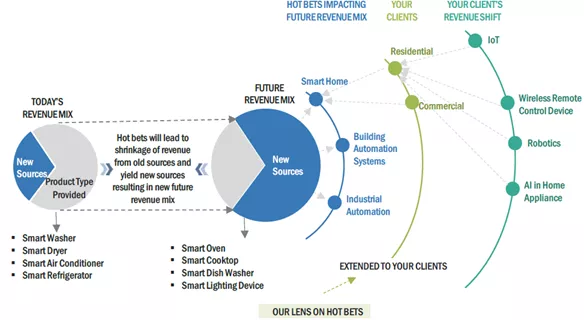
Customer trends are reshaping the smart appliances market, with Internet of Things enabling cloud connectivity, predictive maintenance, and remote monitoring. Consumers demand energy efficient, sustainable, and interoperable devices with artificial intelligence driven personalization. Growing focus on data security, affordability, and service oriented models transforms appliances from standalone products into connected solutions within smart home ecosystems. The residential sector leads adoption, supported by rising demand for smart homes and energy efficient solutions, while the commercial industry adopts smart appliances to improve hotel, restaurant, and office operational efficiency.

Smart Home Appliances Market: Revolutionizing Modern Living Through Connected Intelligence to 2030

The Connected Home Revolution Smart home appliances are becoming a central pillar of modern households as consumers increasingly adopt conne...